
Growing a Pollinator Garden
Provided by: National Wildlife Federation|Published on: April 27, 2021
Grades: 2, 3, 4, 5
Type: Activity - Classroom
Subjects: Biology, Mathematics
Authors: National Wildlife Federation
Region: Global
Languages: English

This resource has been reviewed by SubjectToClimate's climate scientists and verified for scientific accuracy and up-to-date information. Learn about our review process →
This resource has been reviewed by SubjectToClimate's climate scientists and verified for scientific accuracy and up-to-date information. Learn about our review process →
Synopsis
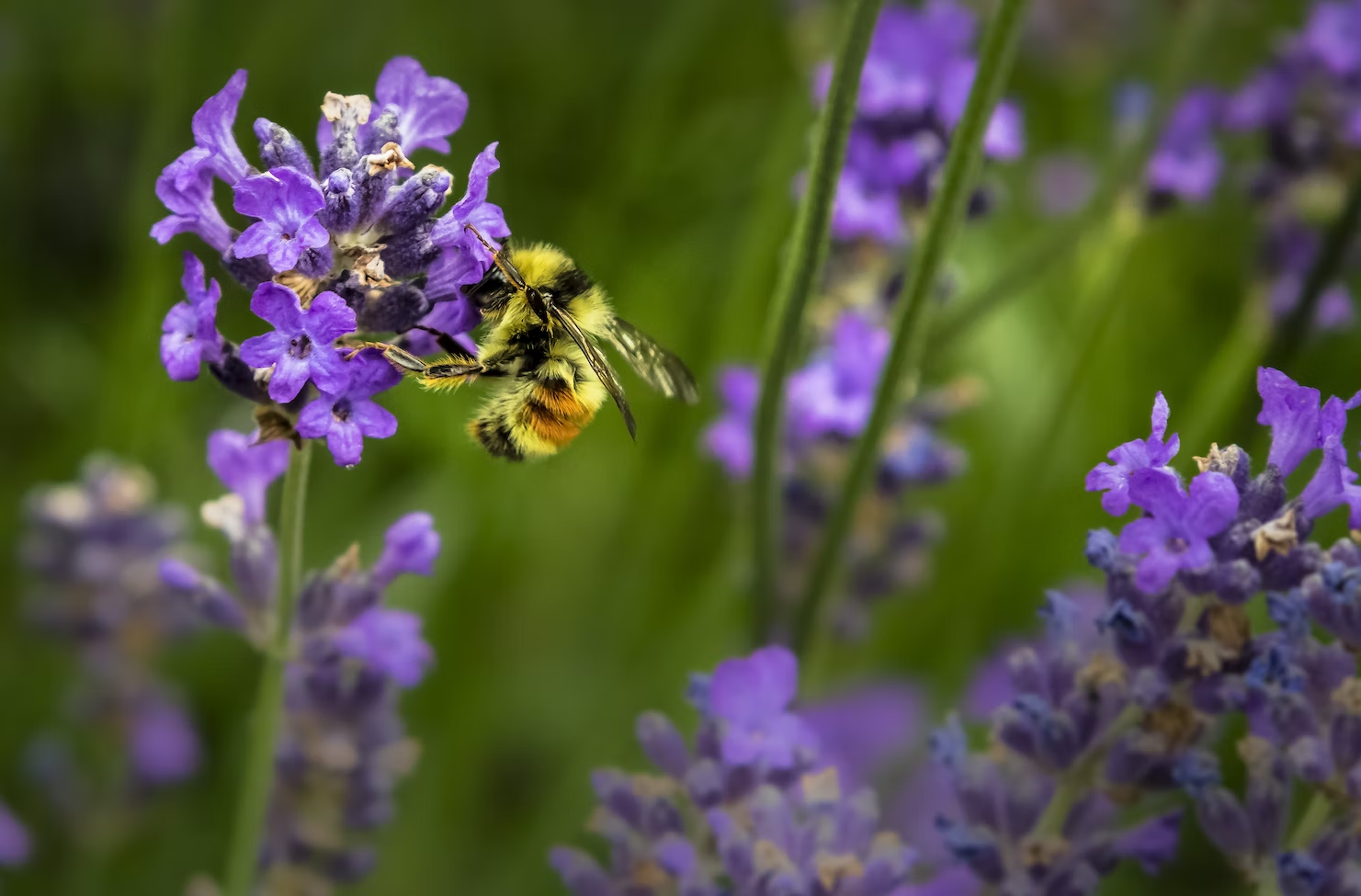
- This engaging activity from National Wildlife Federation guides students through the process of growing a pollinator garden.
- The guide thoroughly explains how to set up a pollinator garden, monitor it, and collect data on its success.
Teaching Materials
Positives
- Students will benefit from having an understanding of the importance of pollinators.
- This engaging, easy-to-follow activity is suitable to be used as a classroom activity or at-home project.
- The activity incorporates opportunities to embed science, civics, and mathematics skills and understanding easily over the course of the school year.
Prerequisites
- If students are completing the activity at home, measurement and data collection skills will be necessary.
- Coir pellets, seeds, and appropriate growing containers are necessary for this activity.
Differentiation & Implementation
- Elementary science classes can use this activity alongside the picture books Bee and Me and Old Enough to Save the Planet.
- This activity can be used as part of the action plan after completing StC's Green Spaces Unit.
- Mathematics and science classes can use this activity to thoroughly embed data collection and measurement skills throughout the year.
- Older elementary mathematics classes can use the collected data to create line and plot graphs.
- Schools or classes wishing to further engage in school gardening could use the resource Resources for Building a School Garden.
The resource is a pollinator guide. It contains step-by-step activities to enable students to know the benefits of pollinators in plant reproduction and growth. This is recommended for teaching.
Teaching Tips
Standards
Resource Type and Format
About the Partner Provider
National Wildlife Federation
The mission of the National Wildlife Federation is to unite all Americans to ensure wildlife thrives in a rapidly changing world. The National Wildlife Federation believes that in order to save wildlife and ourselves, we need to ensure that all Americans have access to clean air and water, safe communities, easy and equitable access to nature, and protection from the ravages of climate change. NWF has a long and respected track record in the field of environmental education and is a leader in applying nature and wildlife conservation to improve K-12 student achievement, particularly in the STEM disciplines, and fostering youth leadership and environmental stewardship. Our programs allow individuals to explore, analyze and take action on many key environmental issues facing communities, such as climate change, wildlife conservation, and environmental justice, with the end result of creating healthy, resilient, just, and thriving communities.
Scientist Reviewed
This resource has been reviewed by SubjectToClimate's climate scientists and verified for scientific accuracy and up-to-date information. Our review process ensures that every resource in our library reflects the current state of climate science.
Learn about our review process →