

1.5 Degrees Celsius Was the Climate Change Line. The UN Says We're About to Cross It
September 3, 2026

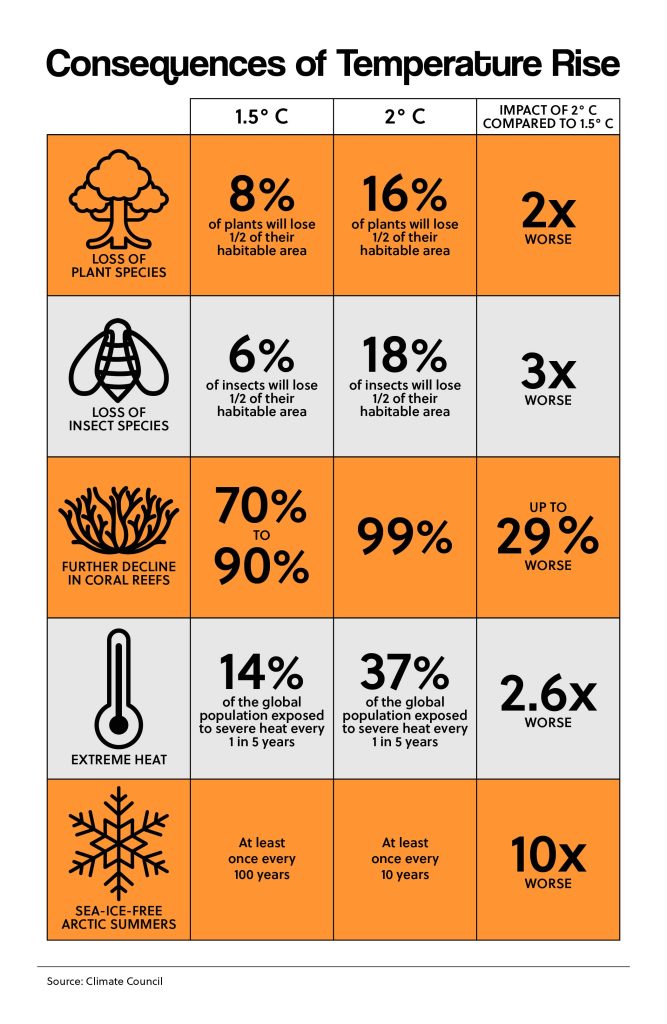
For more than a decade, the United Nations (UN) has challenged world leaders to curb global warming to an average annual temperature of no more than 1.5 degrees Celsius (°C) over pre-industrial times. In the UN Environment Programme (UNEP) report, released Wednesday, the organization’s experts say that humans have failed that test.
“Global temperature rise is set to cross 1.5°C, likely within the next few years, pushing climate risks and impacts to increasingly dangerous heights,” the UNEP wrote in a press release.
Climate scientists widely agree that a benchmark of 1.5°C, set in the Paris climate accord of 2015 by 195 nations, including the US, is the point at which many of the effects of such warming — droughts, wildfires, melting glaciers, rising oceans — become more severe and harder to reverse. Wednesday’s report is the UN’s most explicit acknowledgement yet that surpassing that threshold is unavoidable.
“Humanity is speeding past the limit to avoid climate catastrophe,” UN Secretary-General António Guterres said.
The report notes that the world’s annual average temperature has already surpassed the 1.5°C mark several times. It says the new “best-case scenario” is a peak of 1.8°C, though researchers admit that the current pace of warming could see the world at 2.0°C or higher over pre-industrial times by the end of the century.
The UN has shifted away from its plan to prevent hitting the 1.5°C limit. It is now calling for a new strategy: “Limiting Overshoot.” To do so, and to allow Earth’s natural processes to stabilize temperatures, will require even more robust climate action, the UN says. That will be nearly impossible, though, without buy-in from global leaders.
Reflect: If you could ask the leaders working to protect our planet one question, what would you ask them?
News brought to you by 
Read More News Stories Today!