
The Intersection of the Climate Crisis and Social Justice
Provided by: The Climate Reality Project|Published on: January 9, 2023
Grades: 11, 12, AP
Type: Videos
Subjects: Civics, History
Authors: The Climate Reality Project
Region: North America, United States
Languages: English
This resource has been reviewed by SubjectToClimate's climate scientists and verified for scientific accuracy and up-to-date information. Learn about our review process →
This resource has been reviewed by SubjectToClimate's climate scientists and verified for scientific accuracy and up-to-date information. Learn about our review process →
Synopsis
- This webinar includes presentations by leaders in the climate justice movement as they discuss important topics like environmental and racial justice and the poverty crisis and introduce students to the relevant intersections.
- The webinar also includes a Q&A session and provides students with additional resources.
Teaching Materials
Positives
- This is an in-depth and informative webinar about the importance of approaching climate solutions through an equity and justice lens.
- The panelists provide specific examples of the disproportionate impact of policy decisions and environmental and climatic changes on marginalized communities.
Additional Prerequisites
- The presentations take place in the first half of the video and the Q&A period begins at 38:58.
- Additional resources, including websites, events, and readings, are provided at 1:01:00.
- Be prepared to support the feelings of all students and respect their privacy as discussions occur.
- Although the call to action has already happened, future events and ways to become involved can be found on the Climate Reality Project and Poor People's Movement websites.
Differentiation
- Considering the length of the video and the amount of information presented, students should be encouraged to take notes. Otherwise, the video can be paused every few minutes for reflection as a class.
- As a follow-up activity, have students research the links between economic inequality and racism and the causes of climate change and environmental pollution.
- This webinar can also be used in health classes during lessons about racism within the health sector and the unequal distribution of pollution.
- The connections between improving human health through environmental regulations and helping communities most at risk of climate change can be explored in science and social studies classes.
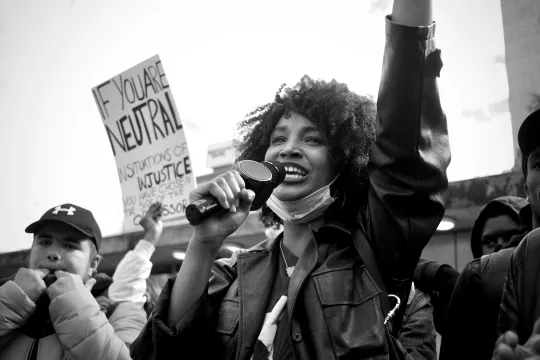
This is an hour-long webinar in video format which is a conversation with a variety of panelists, not all of whom are scientists, but all have a history of working in the climate justice space. This main topic of this webinar is to discuss how the climate crisis and social justice intersect, climate justice, poverty, and how impacts of climate change are disproportionally felt by people of color and vulnerable communities. Overall, the specific science of climate change and related targets is not discussed but the information they present, and reference is accurate. The focus is more on the impacts of climate change, racism, and poverty and what various people and organizations are doing, or want to do, to reduce these impacts and injustices. The discussion is passionate at times, and sensitive topics such as politics, politicians, and COVID are mentioned. Depending on the audience the webinar may cause strong reactions and discussion. However, this could start several important discussions about racism, social justice, climate justice, and the climate crisis. With those considerations in mind, this resource is recommended for teaching.
Teaching Tips
Standards
Resource Type and Format
About the Partner Provider

The Climate Reality Project
Climate Reality Project seeks to catalyze a global solution to the climate crisis by making urgent action a necessity across every sector of society. They recruit, train, and mobilize people to become powerful activists, providing the skills, campaigns, and resources to push for aggressive climate action and high-level policies that accelerate a just transition to clean energy.
Scientist Reviewed
This resource has been reviewed by SubjectToClimate's climate scientists and verified for scientific accuracy and up-to-date information. Our review process ensures that every resource in our library reflects the current state of climate science.
Learn about our review process →