
How Much Clean Electricity Do We Really Need?
Provided by: TED|Published on: April 27, 2021
Grades: 6, 7, 8, 9, 10, 11, 12
Type: Videos
Subjects: Earth and Space Sciences, Engineering
Authors: Solomon Goldstein-Rose, TED
Region: Global
Languages: English
This resource has been reviewed by SubjectToClimate's climate scientists and verified for scientific accuracy and up-to-date information. Learn about our review process →
This resource has been reviewed by SubjectToClimate's climate scientists and verified for scientific accuracy and up-to-date information. Learn about our review process →
Synopsis
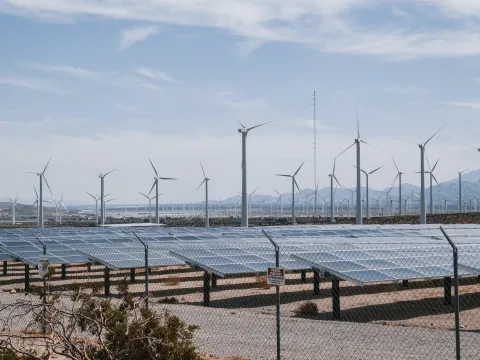
- In this TED video, climate author Solomon Goldstein-Rose explains that we need to produce twelve times more clean electricity to reach net-zero emissions by 2050.
- Students will learn that the global energy system must be rebuilt to fulfill increased energy demands, provide electricity access to developing nations, and compensate for things that cannot be electrified.
Teaching Materials
Positives
- Although we need to produce twelve times the amount of clean electricity we produce today, the video's message remains hopeful.
- The video explains that reliable electricity access can lift people out of poverty.
- The transcript is available in nine languages and contains a read-along feature for students who need support.
Prerequisites
- Students should understand how fossil fuel production contributes to climate change and what will happen if current fossil fuel use continues.
- Students should understand the terms net-zero emissions and net-negative emissions.
Differentiation & Implementation
- Math classes can compare the units of petawatts to kilowatts, megawatts, gigawatts, and terawatts.
- Geography classes can use the Electricity Energy Infrastructure and Resources Interactive Map to locate renewable and nonrenewable energy plants.
- Teachers can follow this resource with this course on clean energy sources.
This 10-minute TED talk describes the current and future needs for energy generation from non-fossil fuel sources. It presents current demand and walks through projections of potential future demand for the global population. This resource focuses primarily on technological innovations (new energy sources, new plants, etc.) and doesn't address behavior or efficiency changes, but otherwise is a good resource. This resource is recommended for teaching.
Teaching Tips
Standards
Resource Type and Format
Scientist Reviewed
This resource has been reviewed by SubjectToClimate's climate scientists and verified for scientific accuracy and up-to-date information. Our review process ensures that every resource in our library reflects the current state of climate science.
Learn about our review process →